


A Five-Second Check — No Prick, No Strips, No Refills
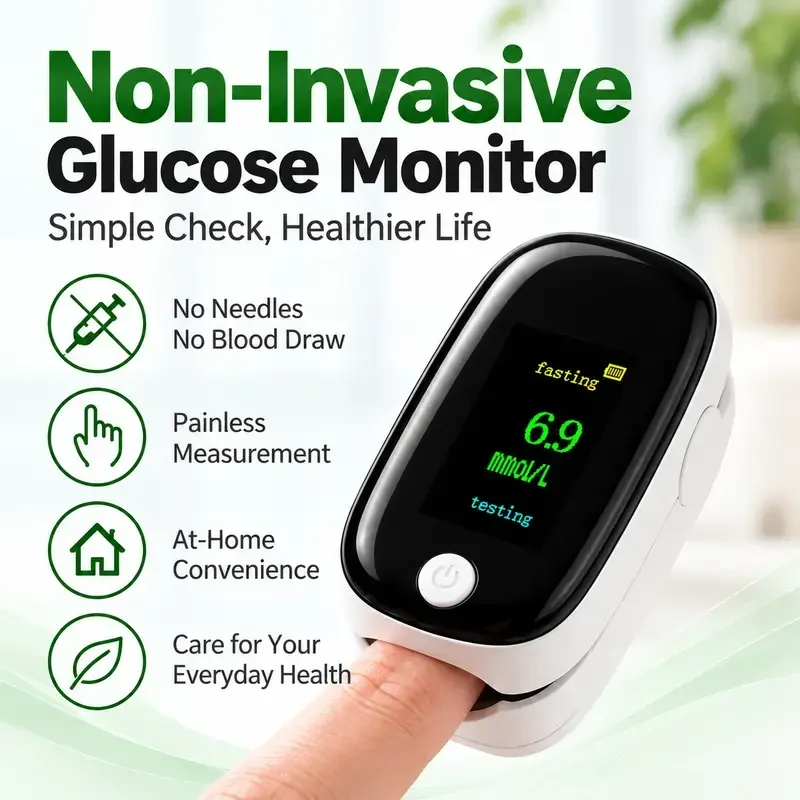
A clip-on device that reads a glucose value through your fingertip in about five seconds and shows it on a bright OLED screen. Two AAA batteries, no consumables, no blood. It is a wellness reference device, not a medical meter — the section below spells out the difference, so please read it before you buy.
What This Device Does — And What It Does Not
It does
- Read a glucose value through the fingertip — no piercing, no blood, no strips.
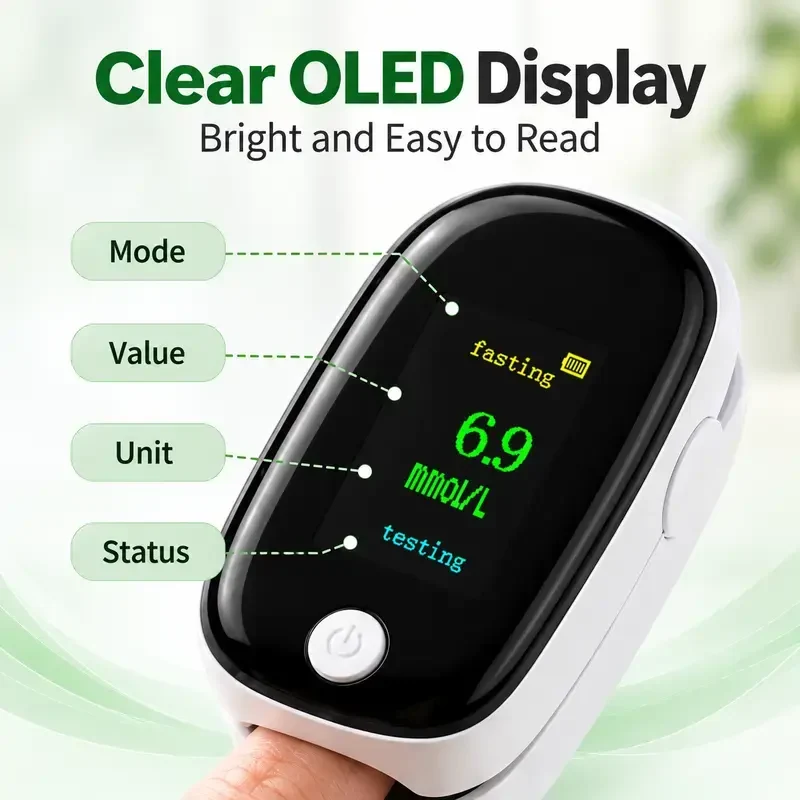
- Show the mode, the value, the unit and the status on one screen.
- Return that reading in about five seconds.
- Run on two AAA batteries, with nothing to reorder.
It does not
- It is not a medical device. No regulatory clearance — FDA, CE or otherwise — appears on this listing or its images.
- It cannot diagnose diabetes or any other condition.
- It must not be used to set an insulin or medication dose. A wrong dose from a bad reading can cause dangerous low blood sugar.
- It does not replace a prescribed meter or CGM. For anything your treatment depends on, use the device your clinician gave you.
Where People Keep It
A Daily Number
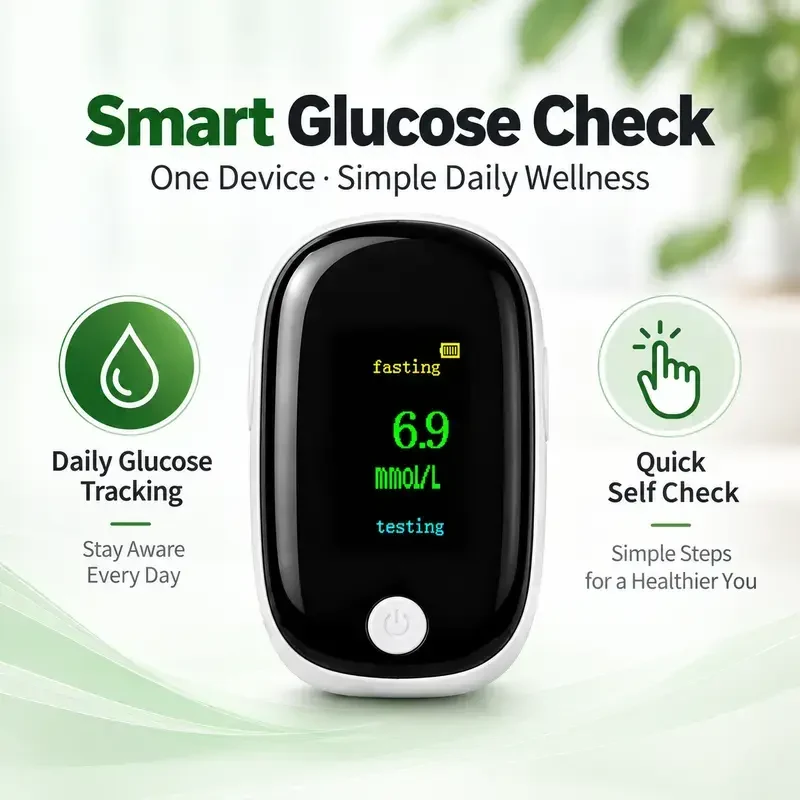
Check at the same time each morning and you have a line to look at, not a single point to worry about.
Habit Check-Ins
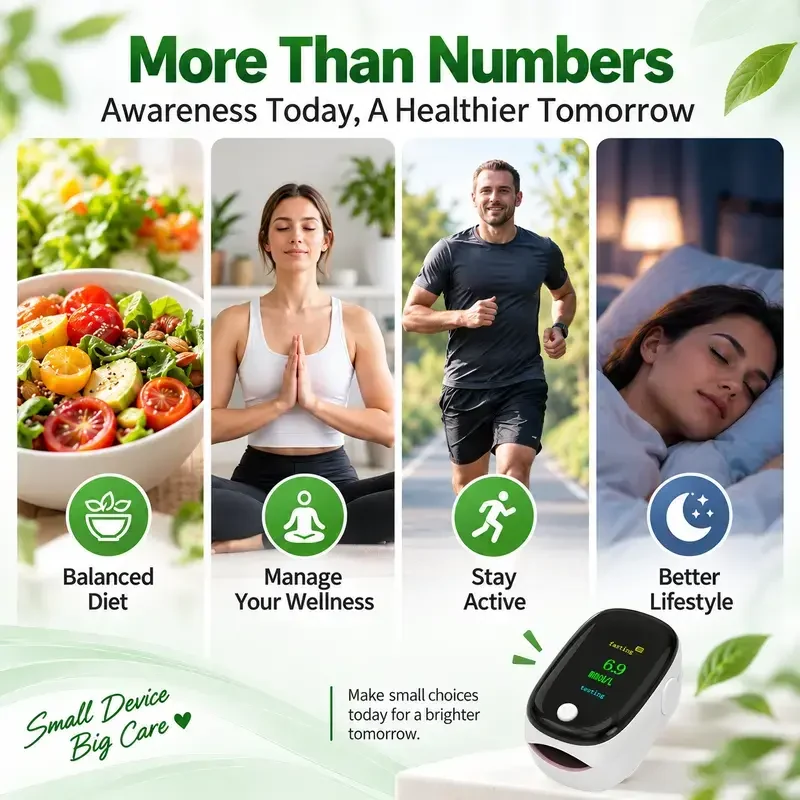
A reference point when you change what you eat or how much you move — a reading to note, not a verdict.
For an Older Parent
One button and a big glowing number, so a parent can take a reading without handling strips or a lancet.
Desk, Bag, Hotel Room
Pocket-sized and battery-powered, so it travels without a case of accessories.
How a Check Works
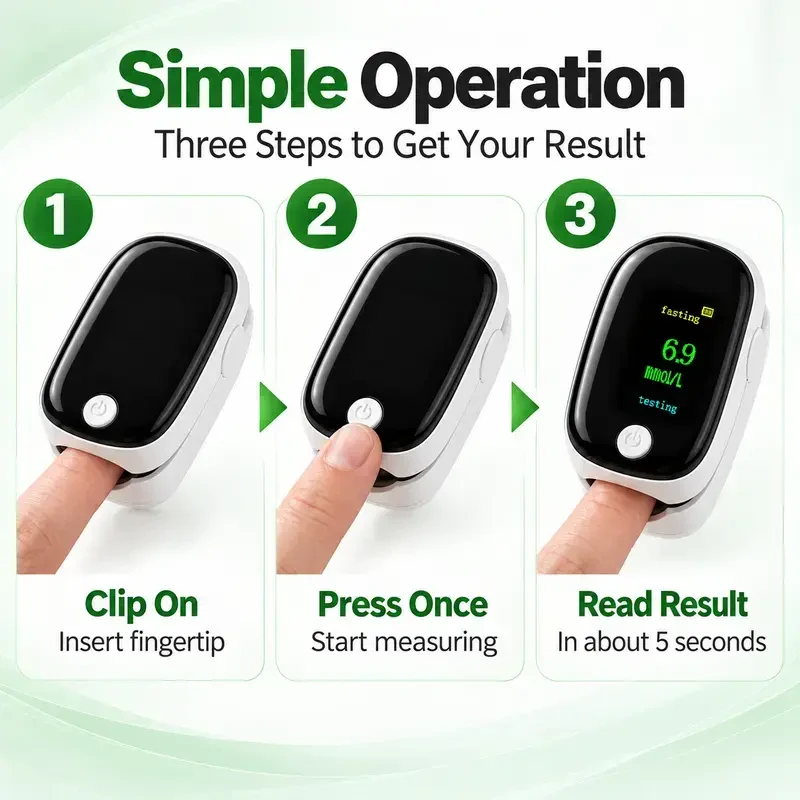
- Clip it on — Slide your fingertip into the opening at the base of the device until it sits snug.
- Press the button once — The single round button on the front starts the reading. No menus, no pairing.
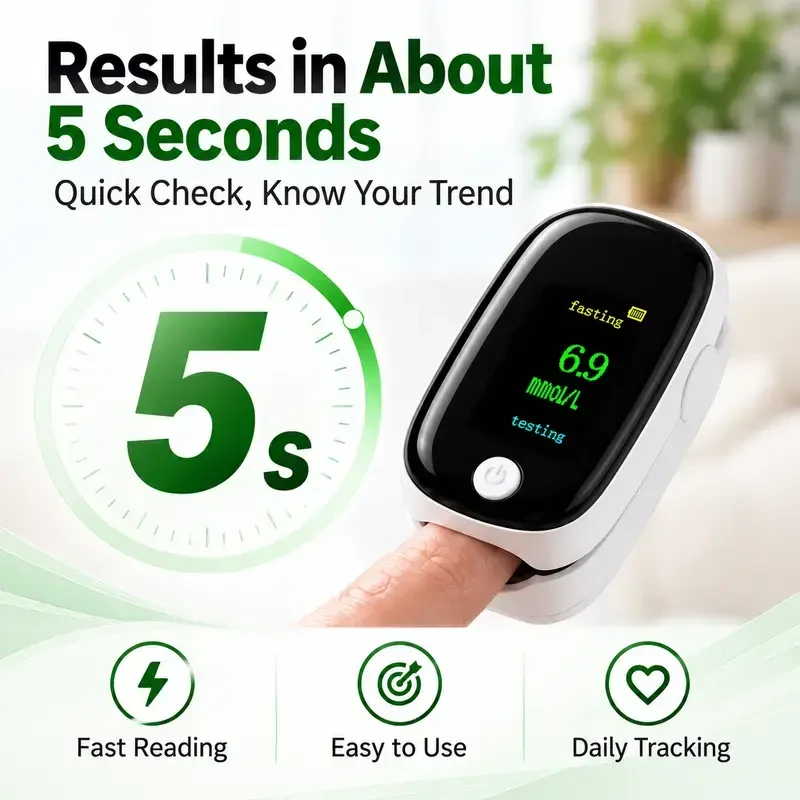
- Wait about five seconds — The screen shows testing while it works, then holds the value.
- Read four things at once — The mode (such as fasting), the value, the unit (mmol/L) and the status all sit on the same screen, so you are not guessing what you are looking at.
- Nothing to buy again — No lancets, no test strips, no sensor to replace. Cleaning the housing is the whole maintenance routine.
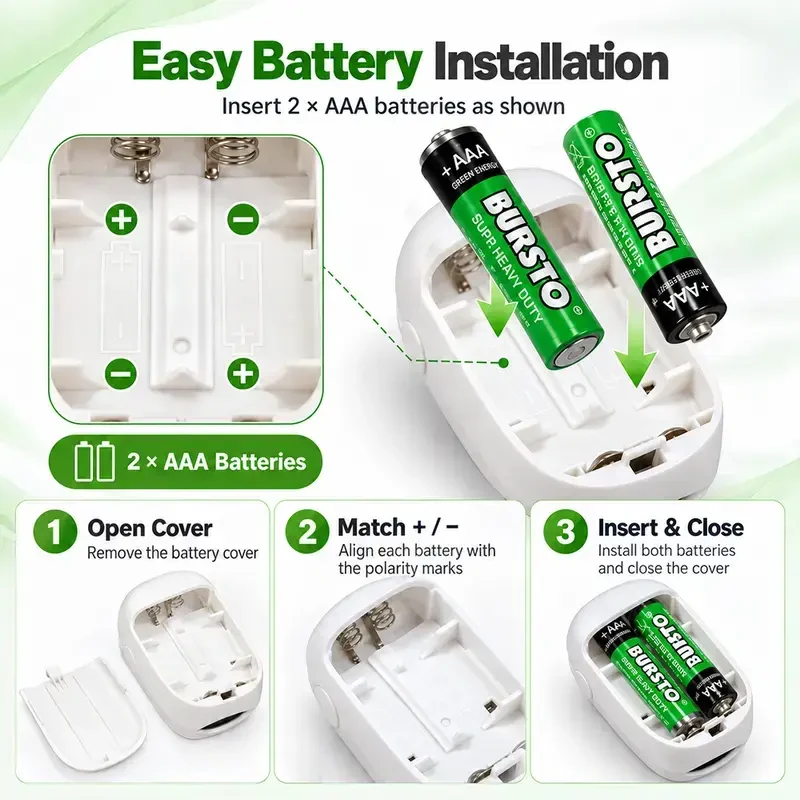
- Two AAA batteries — Open the back cover, match the + and − marks, drop both in and close it. A battery icon on screen tells you when they are running down.
Three Steps, About Five Seconds
- Clip On — insert your fingertip.
- Press Once — start the measurement.
- Read Result — the value appears in about five seconds.
What You Get
The Device
One clip-on monitor with a white oval housing, a black OLED screen and a single front button. No strips, lancets or sensors are needed to use it.
Key Specs
Reading time about 5 seconds · OLED showing mode, value, unit and status · unit mmol/L (× 18 for mg/dL, so 6.9 ≈ 124) · 2 × AAA batteries · clip-on fingertip method · pocket-sized, cordless.
Read This Before You Rely on a Number
- No accuracy data is published here. This listing gives no clinical comparison, no error margin and no reference method, so we cannot claim the reading is accurate — treat it as an indication of direction, not a measurement you can act on.
- Never dose from it. Insulin, sulfonylureas and similar medicines are adjusted on calibrated readings. Using an untested number for that can put you in hospital.
- If you have diabetes, keep your prescribed meter. Your clinician's meter or CGM remains the only basis for treatment decisions.
- Look at the trend, not the single reading. Skin temperature, how tightly you clip it and the room you are in can all shift a non-invasive reading. One morning tells you little; two weeks of mornings tells you something.
- Hands clean, dry and warm. Cold or damp fingers are the usual reason a reading looks erratic.
- Mind the battery icon. Replace both AAAs together when it shows low, so a fading cell does not confuse the reading.
Is this a replacement for a fingerstick meter?
No. A fingerstick meter draws a drop of blood and is calibrated for clinical use. This device reads through the fingertip and carries no regulatory clearance, so it cannot stand in for one.
Can it tell me whether I have diabetes?
No. Diagnosis needs a validated test run by a clinician. A reading from this device is not diagnostic in any sense.
How accurate is it?
We cannot tell you — and be wary of any listing that quotes a figure without a study behind it. No accuracy specification is supplied with this product, which is exactly why it is sold as a wellness reference.
What does 6.9 mmol/L mean in mg/dL?
Multiply by 18: 6.9 mmol/L is about 124 mg/dL. If you are used to mg/dL, do the conversion before comparing with any number you have been given.
Do I need strips or a subscription?
No. There is nothing consumable — the device runs on two AAA batteries and needs no strips, lancets or sensors.

Buy it as a simple daily reference — one button, five seconds, no consumables — and keep a prescribed meter for anything that actually decides your treatment.
Free standard shipping on eligible orders of US$60+ after discounts. Supported destinations and final eligibility are shown at checkout.
Estimated delivery is 7–20 business days, depending on the destination.
Returns may be requested within 30 days after receiving your item, subject to eligibility. View the Refund Policy for complete details.
Questions about this product or your order? Contact our support team and include your order number when available.
Payments are processed securely through Shopify checkout.