


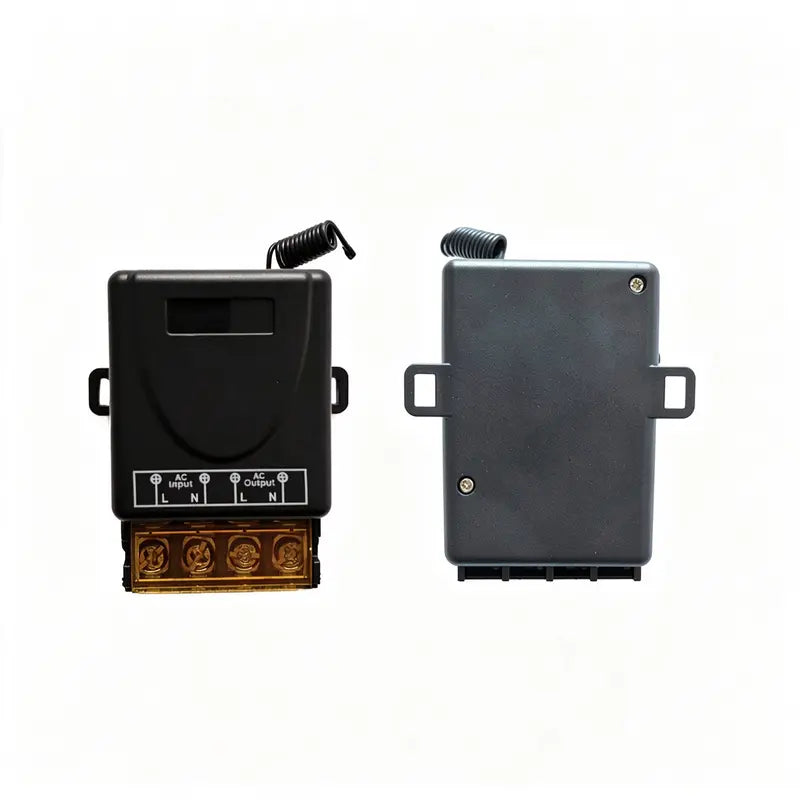
Switch a Pump or a Gate From Across the Yard
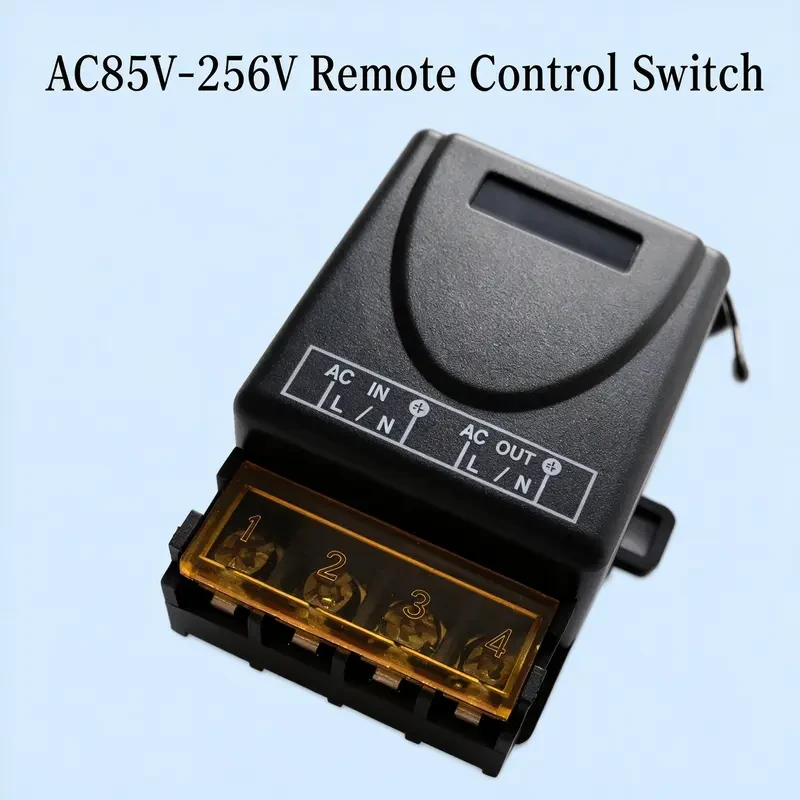
A 433 MHz relay receiver that sits between the mains supply and the thing you want to switch, and takes its orders from a handheld remote. Wide-range input, AC 85–256 V, so the same unit runs on a 110 V or a 230 V supply.
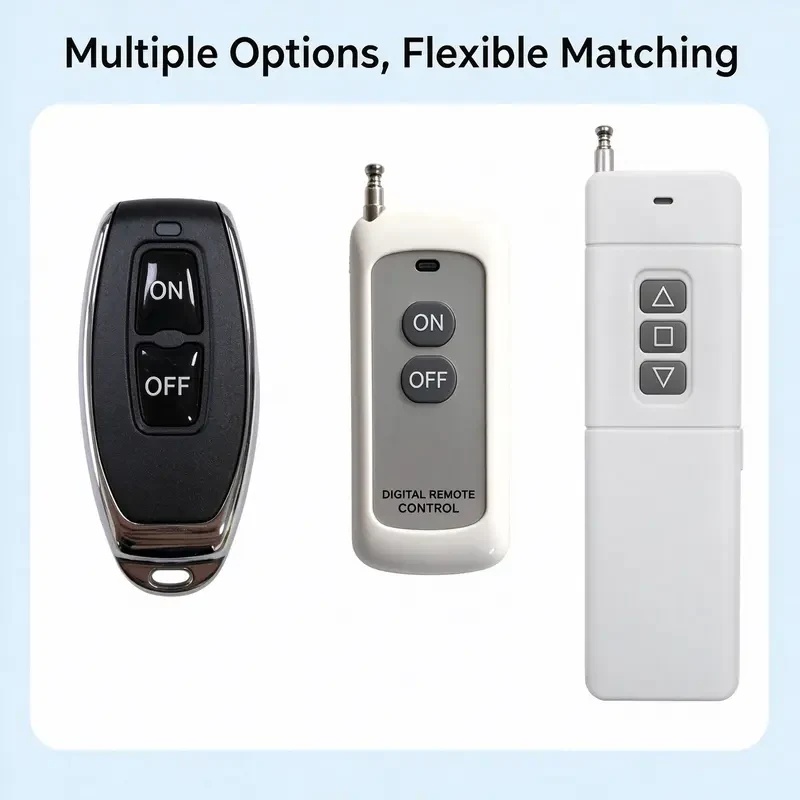
Which Remote Ships With It
The photos show three different handsets — a keyfob, a two-button handset and a three-button handset. They illustrate the styles this receiver can be matched to; they are not all in one box. Check the variant you are ordering: you get one receiver plus the remote shown for that variant.
Pairing is done with a learning button rather than a fixed factory code, so the receiver is matched to the handset that comes with it.
How It Works
- One input, 85–256 V — The wide range covers both 110 V and 230 V supplies, so there is no voltage variant to get wrong and no jumper to set.
- 433 MHz with an external helical antenna — The coil antenna sits outside the case, which is what you want when the receiver is going inside a cabinet, a meter box or a wall.
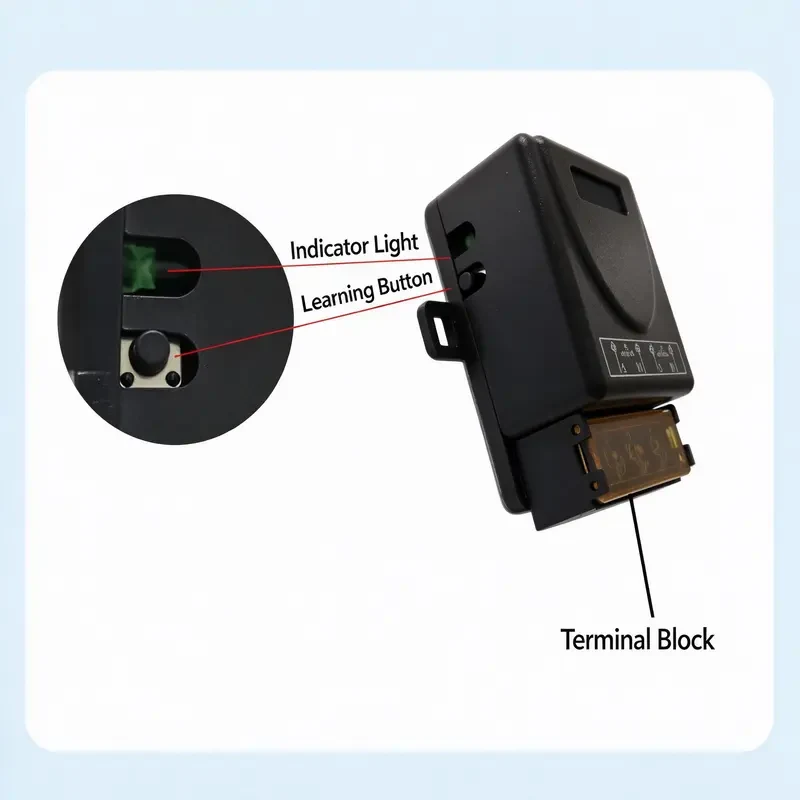
- Learning-button pairing — Press the button on the front and the receiver listens for a handset; the indicator confirms the match.
- Green indicator light — Shows the state of the relay, so you can tell whether it is on without listening for a click.
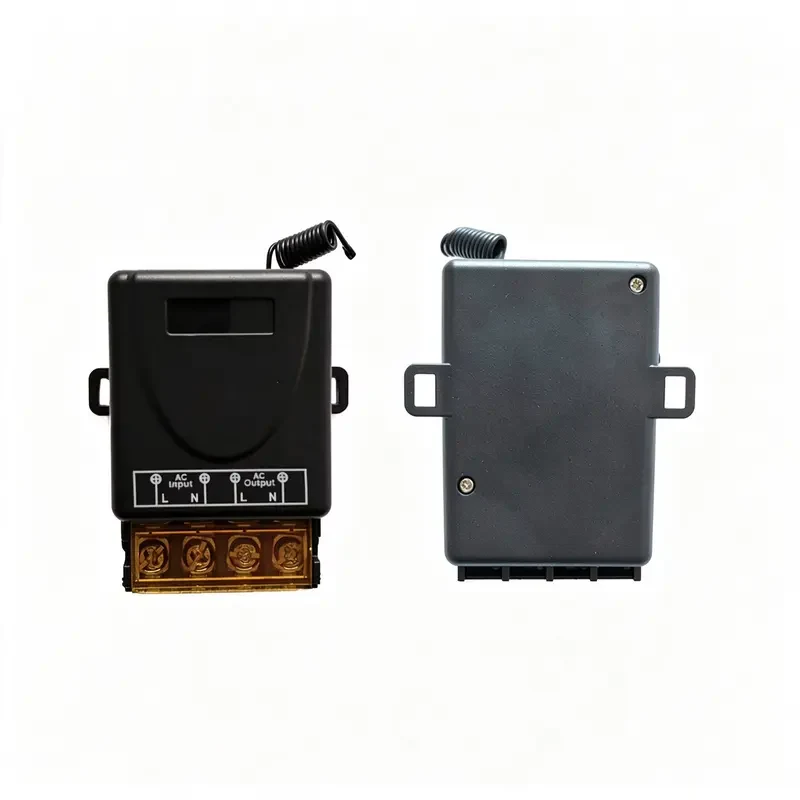
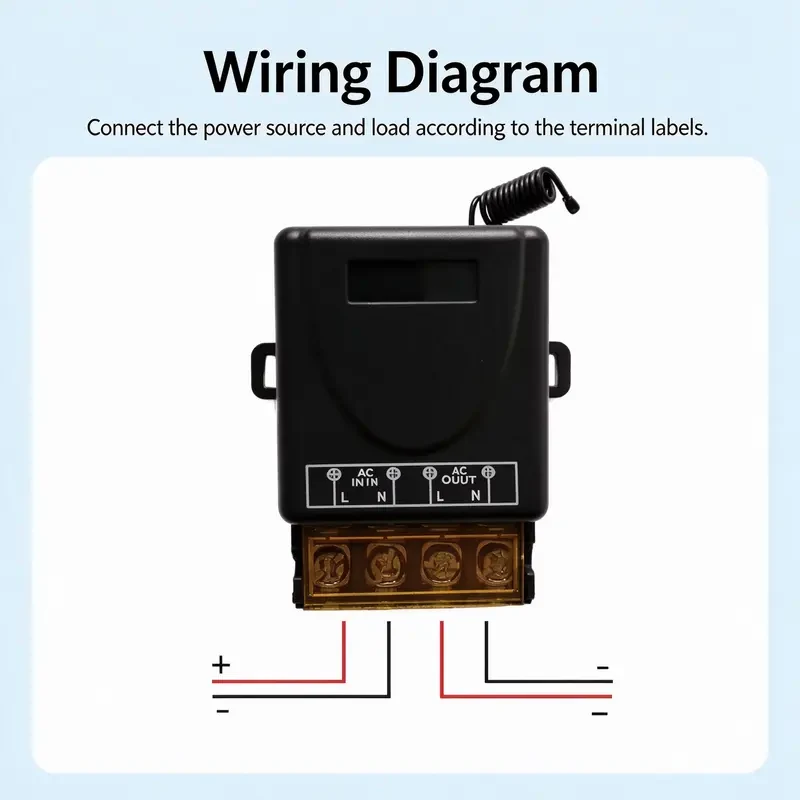
- Four-screw terminal block — Two terminals for the incoming supply (AC IN L / N) and two for the load (AC OUT L / N), numbered 1 to 4 under a clear cover.
- Mounting ears on both sides — Screw it to a backboard, a box or a wall instead of leaving it hanging on the cables.
Two Wires In, Two Wires Out
AC IN — L and N
The incoming mains pair goes to the two left-hand terminals. This is what powers the receiver itself as well as the load.
AC OUT — L and N
The load pair goes to the two right-hand terminals: a pump, a light, a fan or a gate motor.
It is a single-channel switch: it makes or breaks one line. It does not switch earth, and it is not a changeover contact, so it cannot run a motor in both directions on its own.
What You Get
In the Box
One relay receiver and one remote handset in the style of the variant you order. No wiring, no back box and no screws for the ears are included.
Key Specs
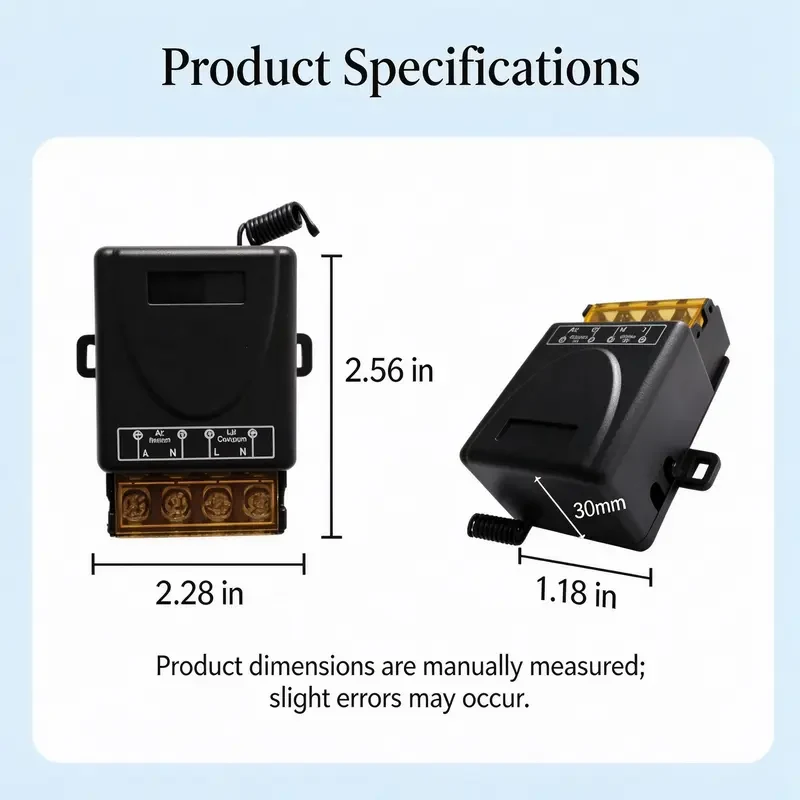
Input AC 85–256 V · 433 MHz RF · single-channel relay, on/off · learning-button pairing · green indicator · 4-screw terminal block (AC IN L/N, AC OUT L/N) · external helical antenna · 65 × 58 × 30 mm (2.56 × 2.28 × 1.18 in).
Before You Wire It Up
- Isolate the circuit first, and have a qualified electrician do the wiring. This unit connects directly to mains voltage — nothing here is low-voltage or plug-and-play.
- The contact rating is not stated on this page. Before you connect a pump or a gate motor, find the amp or watt rating printed on the unit or its packaging. A relay worked beyond its rating welds its contacts shut, which leaves the load permanently live.
- Motors draw a surge at start-up. A pump, a fan or a gate opener can pull several times its running current for a moment, so size the relay with headroom rather than to the nameplate figure alone.
- Ignore the + and − marks in the wiring photo. Mains AC has no positive or negative; those symbols are a drawing error. Follow the L and N labels on the terminal cover, and switch the live conductor rather than the neutral.
- Outdoors or in a damp location, put it in a sealed enclosure. No IP rating is given for this receiver, so it should not be left exposed to rain or hose spray.
- Not for safety-critical use. Do not rely on it for medical equipment, alarm circuits, gas valves or anything where a missed signal causes harm.
- The remote battery type is not stated on this page — check the handset you receive before buying spares.
What size pump can it switch?
We cannot answer that from this listing — no contact rating is published. Check the rating on the unit itself, then add margin for the pump's start-up surge. If the numbers are not on the label, treat it as a light-duty switch only.
How far away will the remote work?
No distance figure is given here, so we will not invent one. 433 MHz with an external antenna generally reaches further than an internal one, but walls, metal boxes and other transmitters all cut the range.
Will it work on 110 V and on 220 V?
Yes — the input range is AC 85–256 V, so it covers both without a variant or a jumper.
Can I add a second remote?
Pairing is by learning button, which is the type that usually accepts extra handsets, but this listing gives no limit. Ask before ordering if you need two.
Does it remember its state after a power cut?
Not stated on this page. For a pump or a heater, test that behaviour before you rely on it.
Can it reverse a motor?
No. It is a single-channel on/off relay, not a changeover contact, so a gate needs its own reversing control gear.
Buy it when you want a remote on/off for one circuit — a pond pump, a shed light, an extractor fan — and check the contact rating on the unit before you hang a motor on it.
Free standard shipping on eligible orders of US$60+ after discounts. Supported destinations and final eligibility are shown at checkout.
Estimated delivery is 7–20 business days, depending on the destination.
Returns may be requested within 30 days after receiving your item, subject to eligibility. View the Refund Policy for complete details.
Questions about this product or your order? Contact our support team and include your order number when available.
Payments are processed securely through Shopify checkout.